
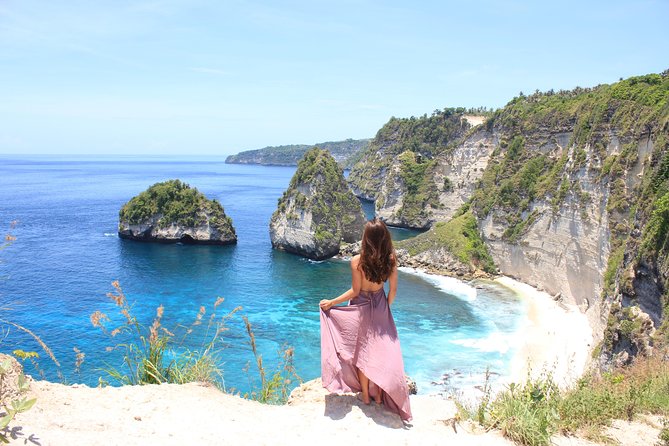
All of Bali, from one beach.
Batur before sunrise, the Kelingking headland by boat, Uluwatu when the fire dance starts, and a driver who has you back on Petitenget for dinner. What each trip is like, what it costs, where to book.
Seven trips that carry the week.
A Seminyak holiday is mostly a series of day trips, and these are the ones that keep coming back full of happy people: the village loop north, the boat east to the islands, the volcano at 2am, the driver who waits while you swim.
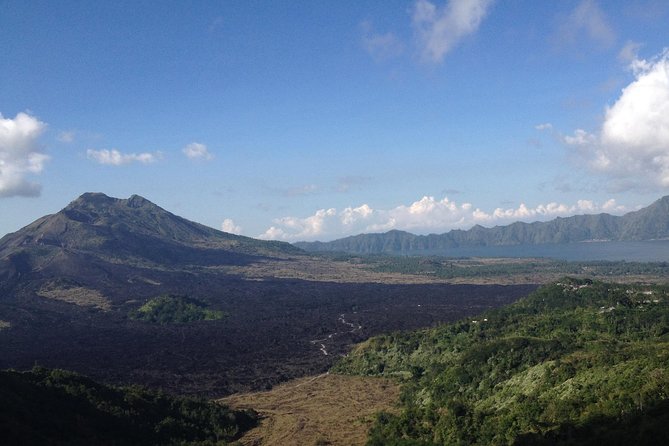
Bali Full-Day Traditional Village Sightseeing Trip All Inclusive
Full-day Ubud and Bali highlights from Seminyak with private guided craft stops, temples, Mt. Batur lunch views, and Tegunungan Waterfall.
From $68 per person
Read the review → ★ 5.0Books out earlyExperts Bali Driver : Best Bali Private Driver for Tour in BaliFrom $321,339 reviews
 ★ 5.0Island classicBali Hai Sunset Dinner CruiseFrom $821,173 reviews
 ★ 4.5Worth the 2am alarmPrivate Arrival Transfer: Bali Airport to HotelFrom $6739 reviews
 ★ 5.0Half a day, no stressUbud Hot Springs and Waterfall Private Guided TourFrom $18719 reviews
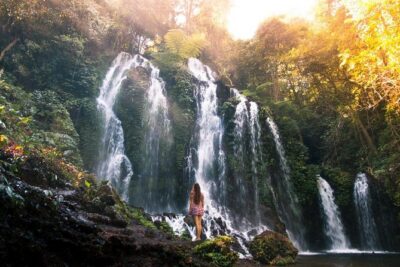 ★ 5.0First-timer pickBali Secret Waterfall Tour – Private and All-InclusiveFrom $109688 reviews
Repeat favouriteBali Quad Bike Pass by Waterfall Gorilla Cave Private TransferFrom $51638 reviews
★ 5.0First-timer pickBali Secret Waterfall Tour – Private and All-InclusiveFrom $109688 reviews
Repeat favouriteBali Quad Bike Pass by Waterfall Gorilla Cave Private TransferFrom $51638 reviews
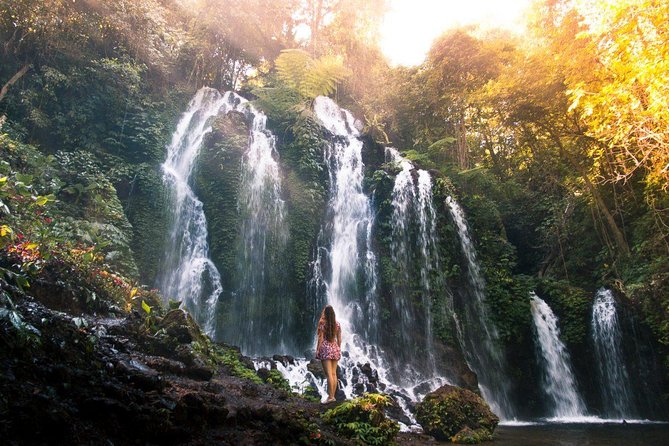
Ubud is where the flat part of Bali ends.
Leave Seminyak at eight and the coast turns into rice terraces by nine: Tegalalang cut into the slope, the monkey forest under its banyans, a hot spring in the gorge, a waterfall you walk two hundred steps down to reach. Most drivers will run the whole loop and still have you home for a beach-club sunset.
Which Bali day are you leaving the beach for?
Almost nobody staying in Seminyak does all three. Pick the one that sounds like your holiday: the green hills, the boat east, or the alarm at half past one. Every option behind each card is already priced and reviewed.
The green one
Rice terraces and waterfalls
from $18 · 719 reviews
North through Mengwi and up into the hills. Tegalalang first while the light is still low, then a swing over the gorge if you want the photograph, then a waterfall and a hot spring before lunch. Easy going, plenty of stops, nobody has to be brave.
Compare the Ubud loops →
 The big one
The boat east to Penida
from $119 · 538 reviews
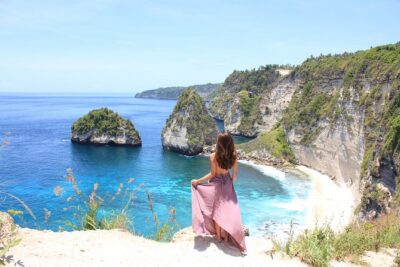
Fast boat out of Sanur, jeep across a rough island, and the Kelingking headland dropping away into water the colour of a swimming pool. Long day, bumpy roads, the best photographs of the trip. Take the seasickness tablets seriously.
See the Penida trips →
The big one
The boat east to Penida
from $119 · 538 reviews
Fast boat out of Sanur, jeep across a rough island, and the Kelingking headland dropping away into water the colour of a swimming pool. Long day, bumpy roads, the best photographs of the trip. Take the seasickness tablets seriously.
See the Penida trips →
Bali saves its best hour for last.
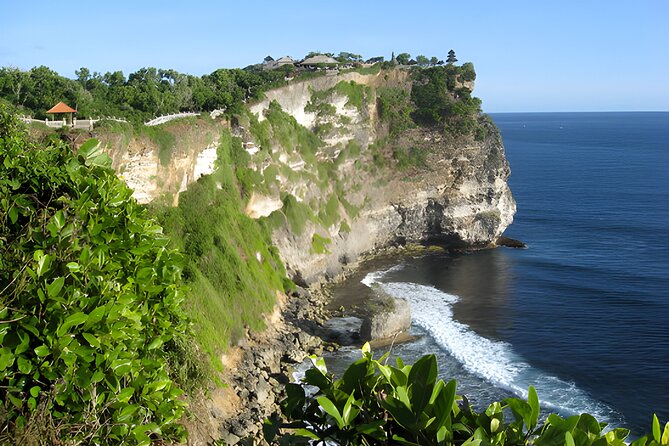
Half past six on the west coast and everything stops. On the Bukit that means the Kecak chant starting on the cliff edge at Uluwatu with the sun going down behind the dancers. In Jimbaran it means grilled snapper and plastic chairs on the sand. In Seminyak it means a beanbag and a bottle. All three are bookable, and all three run on the same clock.
The clear water is an hour east.
Seminyak surf is grey and lively, which is perfect for a lesson and useless for a snorkel. Padangbai and the Blue Lagoon are where the visibility lives, and a boat off Penida puts you over manta cleaning stations.


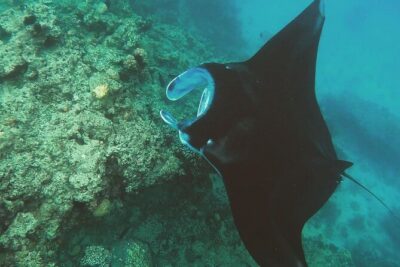
Book the messy half day.
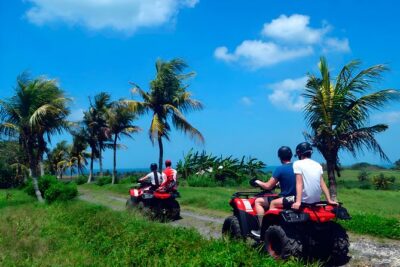
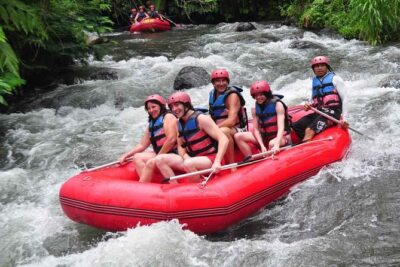
Quad bikes through a cave and out into the paddies, rafting the Ayung past carvings cut into the canyon wall, a swing out over the treetops with a harness and a photographer. Wear the shorts you do not care about.
The island keeps its own calendar.
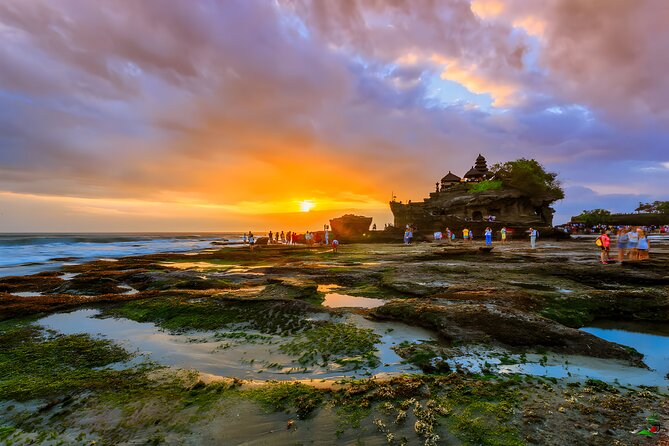
Tanah Lot sits on a rock the tide cuts off twice a day. Ulun Danu Beratan floats on a lake up in the cool highlands. Lempuyang makes you queue an hour for one photograph through the split gate. A guide is the difference between a car park and understanding what is going on, and a sarong is not optional.
Bali, one drive at a time.
Ubud for the green. Nusa Penida for the cliffs. Uluwatu for the fire dance. Canggu for coffee and a surfboard. Jimbaran for fish on the sand. Tanah Lot for the tide.
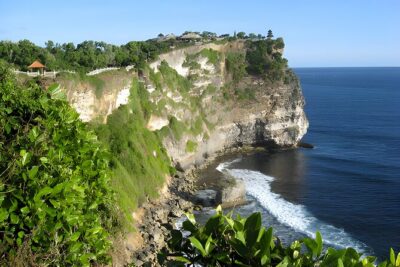

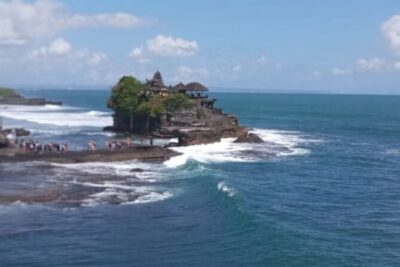
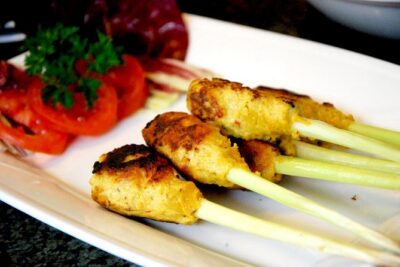
Twelve kinds of Bali morning.
Twelve ways to spend a morning out of Seminyak, each with its own list underneath, each priced and reviewed by the people who went.



Everything worth seeing is a drive away.
Bali is small and the traffic is not, so a good day trip is really a good route. These six are the ones drivers know cold, from the hill loop north to the long haul over to the east coast.

Jet lag, hills, boat.
Jet lag first, hills second, boat third. Put the 2am volcano on night four if you still have it in you.
 Day 1
Stay on the sand
Do not book a car on day one. A surf lesson at Batu Bolong, an afternoon massage on Petitenget, and the sun going down over the beach bars is a full day when you landed at dawn.
Plan day one →
Day 1
Stay on the sand
Do not book a car on day one. A surf lesson at Batu Bolong, an afternoon massage on Petitenget, and the sun going down over the beach bars is a full day when you landed at dawn.
Plan day one →
 Day 2
Go up to the green
Early car north, rice terraces before the coaches, monkey forest, a waterfall, a hot spring to finish. Ask the driver to come home the back way past Tanah Lot if the tide is out.
Plan day two →
Day 3
Take the boat
Sanur harbour by seven, forty minutes across the strait, then the west coast of Penida: Kelingking, Broken Beach, Angel Billabong, and a snorkel stop if the swell allows.
Plan day three →
Day 2
Go up to the green
Early car north, rice terraces before the coaches, monkey forest, a waterfall, a hot spring to finish. Ask the driver to come home the back way past Tanah Lot if the tide is out.
Plan day two →
Day 3
Take the boat
Sanur harbour by seven, forty minutes across the strait, then the west coast of Penida: Kelingking, Broken Beach, Angel Billabong, and a snorkel stop if the swell allows.
Plan day three →
Latest Seminyak tour reviews.
 ★ 5.0Private Arrival Transfer : Ngurah Rai Airport to Hotel in BaliFrom $163 reviews
 ★ 3.5Gate Heaven of LEMPUYANG TEMPLE & East Bali ToursFrom $803 reviews
 ★ 4.5Private Tour: Gates of Heaven,Tukad Cepung Waterfall, Tirta ganggaFrom $703 reviews
 ★ 5.0Full Day Private Tour to Ubud Waterfall and Tanah Lot SunsetFrom $703 reviews
 ★ 5.0Bali Full-Day Tour: Exploring Instagrammable Place in North BaliFrom $803 reviews
 ★ 5.0Surf lesson | Energy surfschool kruiFrom $333 reviews
 ★ 5.0Private Half Day-Tour: Ubud Art Village TripFrom $303 reviews
 ★ 5.0Ubud Monkey Forest Sanctuary Tours and CretyaFrom $733 reviews