
Review · UBUD DAY TRIPS FROM SEMINYAK
Ubud Cultural and Historical Guided Tour with Transfer
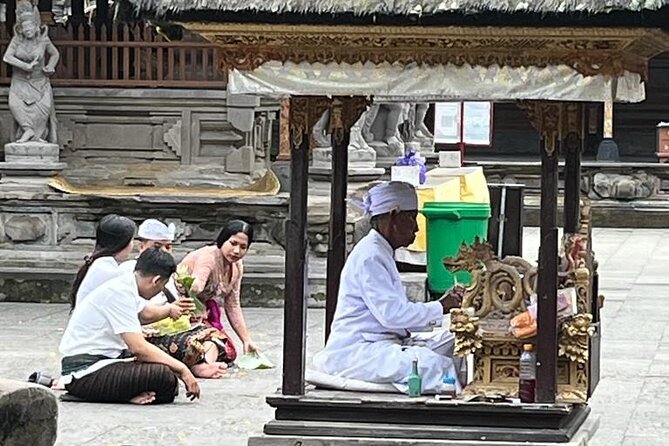
Ubud feels calm until you start walking its old paths. This guided Ubud Historical Tour strings together temples and carved memorials, then adds the spring-water ritual at Tirta Empul.
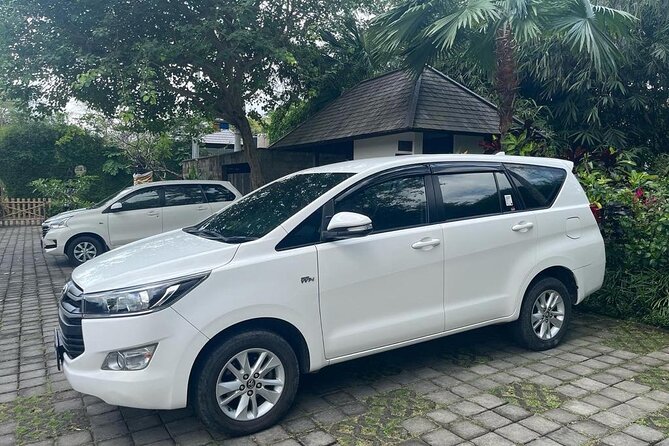
I especially like the English-speaking driver-guide angle, because it helps you understand what you are looking at instead of just snapping photos. I also like the air-conditioned vehicle for the long transfers between Batuan, Tampaksiring, and Gunung Kawi.
One thing to plan for is cost creep: several stops have entrance fees you pay on the day, and this day runs about 10 hours starting at 8:30 am.
Key highlights worth planning for
- Seminyak pickup and an air-conditioned ride for a full day circuit
- Batuan Traditional House and Puseh Batuan Temple for a local village start
- Goa Gajah (Elephant Cave) with 11th-century origins and a bathing area with stone figures
- Gunung Kawi’s rock-cut memorial temples tied to 11th-century royal rule
- Tirta Empul’s spring-water bathing pools as the emotional peak of the itinerary
- Gunung Kawi Sebatu Temple as a quieter, Vishnu-focused follow-up
More ways to do the run up to Ubud
- Ubud Hot Springs and Waterfall Private Guided Tour
★ 5.0 · 719 reviews - Ubud: Monkey Forest, Water Temple, Rice Terrace, Waterfall
★ 5.0 · 538 reviews - Ubud Tour – Ubud Highlight – Private Tour All inclusive
★ 5.0 · 399 reviews - Ubud Tour With Sacred Monkey Forest Sanctuary – Waterfall – Rice Terrace
★ 5.0 · 385 reviews
A 10-hour Ubud circuit starting in Seminyak
This tour is built as a day loop out of Seminyak, with pickup available and a start time of 8:30 am. You are looking at roughly 10 hours, which is just enough time to cover several major sites without feeling like you are sprinting nonstop.
It is described as a private tour for your group, but there are also notes about group discounts. Practically, what matters is that you have your own guide and vehicle, not a free-for-all with strangers changing the plan every hour.
Price and logistics: what $45.91 really means
The headline price is $45.91 per person, and that includes a lot of the hard parts: air-conditioned vehicle, parking fees, a bilingual-English driver-guide, and bottled water. You also get a mobile ticket and confirmation at booking.
What is not included is the ticketing at most sites. Based on the listed fees, plan on paying these entrance charges on the day:
- Tirta Empul Temple: IDR 50,000 per person
- Gunung Kawi Sebatu Temple: IDR 30,000 per person
- Puseh Batuan Temple: IDR 30,000 per person
- Elephant Cave: IDR 50,000 per person
- Mount Kawi, Pakrisan River: IDR 50,000 per person
That comes to about IDR 210,000 total in entrance fees (the Batuan traditional house stop is listed as free). So you are not just buying a ride, you are buying guided access plus the vehicle that ties together a big swath of eastern Ubud-area heritage.
Also note the meal is not included. Build in time for water breaks and a proper sit-down lunch somewhere along the route if you need it, because temple hopping can turn long fast when your stomach starts negotiating.
Stop 1: Batuan Traditional House Compound and the Gung Aji family
The day kicks off in Batuan Village in the Sukawati District area of Gianyar Regency. This first stop is a traditional house compound owned by the Gung Aji family, sometimes labeled in tourism materials as the Bali Traditional House Gung Aji.
Why I like starting here: you get grounded in daily life before the more dramatic cave-and-temple stops. Even if you only get a glimpse of how a Balinese family compound is organized, it changes the way you see everything later, because temples and rituals make more sense when you understand where people live and worship.
The good news is practical too. The stop is listed as 1 hour with admission free, so you are not immediately hit with ticket lines or extra fees. The tradeoff is that it is a “house visit” style stop, so it can feel quieter and less cinematic than Goa Gajah. It is still worth it for context.
More drivers who know the whole island


Stop 2: Puseh Batuan Temple and Khayangan Tiga
Next you visit Puseh Batuan Temple, a local village temple. This temple is described as part of Khayangan Tiga, the three major temples in a village, dedicated to the god Wisnu (Vishnu).
This is one of those stops where your guide matters. Without a few explanations, you might just see stone and offerings. With the right context, you start noticing how the layout supports worship and how the same deity appears across different sites.
The timing is about 1.5 hours, and the entrance fee is listed as IDR 30,000 per person. The site being a working village temple is also why you should keep your behavior respectful and your focus on the ritual space, not just the photo spots.
Stop 3: Goa Gajah (Elephant Cave) and the Lua Gajah link
Then the day turns more dramatic at Elephant Cave, known as Goa Gajah. The cave is described as dating back to the 11th century and tied to the king of Udayana, and the name is connected to the Lua Gajah small river nearby.
Here is what tends to make people pause: the cave is not just a dark hole in the rock. The description mentions a bathing place in front of the built area, including six figures. That detail matters because it hints at how people used physical space for cleansing and ritual, not only as a passageway.
You spend about 2 hours at this stop, with entrance listed as IDR 50,000 per person. A practical tip: if you want photos without stress, go with your guide’s timing advice. Caves and ceremonial areas often mean light changes fast, and you do not want to waste your best moment waiting in the wrong spot.
Stop 4: Gunung Kawi King Memorials over Pakrisan River
After Goa Gajah, you move to Gunung Kawi, also called Mount Kawi. This complex is described as an 11th-century temple complex linked to Anak Wungsu, the son of Udayana. The key feature is that Gunung Kawi consists of rock-cut memorial temples, with ten memorials carved into the cliffside.
The geography is part of the effect. It is tied to the Pakrisan River area, so you get that combination of carved stone and drop-off views that make the site feel carved into Bali itself.
Plan on about 1.5 hours here, and the entrance fee is listed as IDR 50,000 per person. The main consideration is your energy level. This stop is not only about standing and looking, it is about moving through a cliffside setting. Wear comfortable shoes and pace yourself.
Stop 5: Tirta Empul Spring Water Temple, cleansing by water
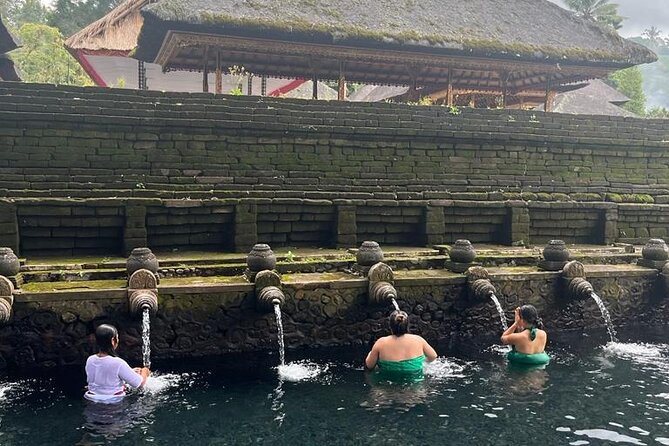
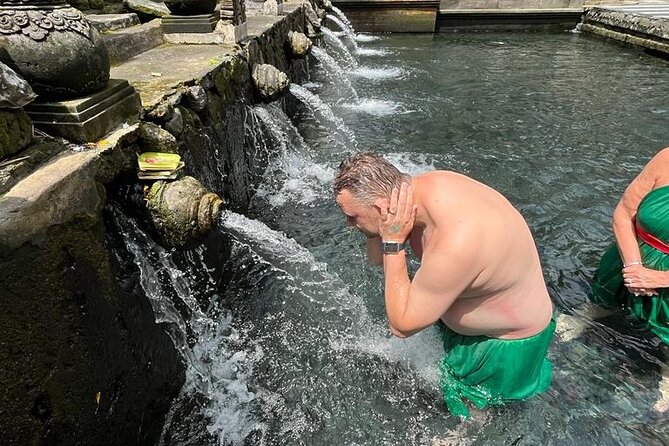
The itinerary’s emotional peak is Tirta Empul or Spring Water Temple. It sits in the Tampaksiring region near Gunung Kawi and is described as built around springs and bathing pools. The idea is cleansing water, not just sightseeing.
You get around 2 hours at this stop, with the entrance fee listed at IDR 50,000 per person. Since the site is built around bathing pools, I strongly recommend bringing what you need for comfort: a change of clothes or at least a dry layer for later, and something simple for your personal items so you are not juggling everything in wet areas.
Even if you do not join any water ritual yourself, watching the flow of people through the pools can be moving and very human. This is where “historical” becomes something you can sense, because water is doing the work.
Stop 6: Gunung Kawi Sebatu Temple for Vishnu worship
The last major stop is Gunung Kawi Sebatu Temple. The timing of its construction is not described as exact, but the notes say historical records state it was built for worship of the gods, especially Lord Vishnu, based on royal orders.
This stop is listed as about 2 hours, with an entrance fee of IDR 30,000 per person. Why it is a good way to end the day: it is connected to the same Vishnu theme you saw at Puseh Batuan, but it feels quieter, and you can start comparing how different temple sites express devotion through space.
By the time you reach Sebatu, you have already seen cave bathing features, rock-cut memorials, and spring-water pools. So your brain is primed to notice the differences in ritual approach, not just the differences in scenery.
Your guide matters more than you think
The tour is driven by an English-speaking driver-guide, and that can make or break a long day. In the real world, a patient guide can also save your schedule when small delays happen.
For example, Kadek has been praised for being patient and waiting when timing went off. Nanda also shows up in feedback as a guide who makes the day feel worth it, with clear explanations and a calm approach. Even if you do not get either name, the takeaway is simple: ask questions, and use the guide’s explanations to help you “read” each site as a living part of Balinese life.
A smart way to get value from this itinerary is to choose one theme for the day. For instance, track how Vishnu worship appears at Puseh Batuan, then look for how the same thread shows up at Gunung Kawi Sebatu. Do that, and the sites stop feeling like separate stops and start feeling like one coherent day.
Who should book this tour, and who might want a different plan
This tour fits best if you want a focused cultural day that covers several big Ubud-area heritage sites in one go. It also suits you if you like structure, because the stops are clearly timed and you have a vehicle handling the travel.
If you prefer a slower pace with fewer sites, the 10-hour length may feel like a lot. And if you hate paying entrance fees on arrival, this is not the right pick since most stops charge separately.
Should you book this Ubud Historical Guided Tour with Transfer?
I think you should book this tour if you want an efficient way to see Batuan village context, Goa Gajah, Gunung Kawi memorials, and Tirta Empul in a single day, with an English-speaking guide to connect the dots. The included vehicle and bottled water are practical wins, and the way the stops are sequenced gives you a logical arc from everyday compound life to water cleansing rituals.
I would skip or switch to something else if you are trying to keep the total day cost low, or if you are easily tired by multiple temple visits back to back. Entrance fees add up, and the day starts early.
If you do book, plan your day around one main goal: understand what each sacred space is doing for worship and cleansing. Do that, and the history feels less like dates and more like something you can feel in the stone and water.
FAQ
What time does the tour start?
The start time is 8:30 am.
How long is the Ubud Cultural and Historical Guided Tour?
The duration is listed as 10 hours (approx.).
Do I get pickup from Seminyak?
Pickup is offered, and the tour is located in Seminyak, Indonesia with transfer included.
What is included in the price?
Included features are an air-conditioned vehicle, parking fees, an English speaking driver tour guide, and bottled water.
Are entrance fees included for all stops?
No. Entrance fees are not included for Puseh Batuan Temple, Elephant Cave, Mount Kawi, Tirta Empul Temple, and Gunung Kawi Sebatu Temple. The Batuan traditional house stop is listed as free.
Is there a meal included?
No, meal is not included.
Is this tour private?
It is described as a private tour/activity, meaning only your group participates.
What is the cancellation policy?
You can cancel for free up to 24 hours in advance for a full refund. If you cancel less than 24 hours before the start time, you do not get a refund.
More Tour Reviews in Seminyak
- Bali Full-Day Traditional Village Sightseeing Trip All Inclusive★ 5.0 · 3,069 reviews
- Experts Bali Driver : Best Bali Private Driver for Tour in Bali★ 5.0 · 1,339 reviews
- Bali Hai Sunset Dinner Cruise★ 5.0 · 1,173 reviews
- Mount Batur Sunrise Trekking★ 5.0 · 947 reviews
- Private Arrival Transfer: Bali Airport to Hotel★ 4.5 · 739 reviews
- Ubud Hot Springs and Waterfall Private Guided Tour★ 5.0 · 719 reviews
Your Own Car for the Day
- Experts Bali Driver : Best Bali Private Driver for Tour in Bali★ 5.0 · 1,339 reviews
- Private Arrival Transfer: Bali Airport to Hotel★ 4.5 · 739 reviews
- Bali Quad Bike Pass by Waterfall Gorilla Cave Private Transfer★ 5.0 · 638 reviews
- Bali Blue Lagoon Snorkeling with Private Transfer & Lunch★ 5.0 · 539 reviews
- Private Car Charter in Bali with an English-speaking Driver★ 5.0 · 473 reviews
- Bali Airport Private Arrival Transfer★ 5.0 · 329 reviews
Up the Hill Again: More Ubud Days
- Ubud Hot Springs and Waterfall Private Guided Tour★ 5.0 · 719 reviews
- Ubud: Monkey Forest, Water Temple, Rice Terrace, Waterfall★ 5.0 · 538 reviews
- Ubud Tour – Ubud Highlight – Private Tour All inclusive★ 5.0 · 399 reviews
- Ubud Tour With Sacred Monkey Forest Sanctuary – Waterfall – Rice Terrace★ 5.0 · 385 reviews
- Tanah Lot Tour with Ubud Monkey Forest, Rice Terraces, and Waterfalls★ 5.0 · 273 reviews
- Ubud Waterfalls, Temple & Rice Terrace Guided Tour★ 5.0 · 238 reviews
Just written up around Seminyak


Ubud Day Trips from Seminyak, compared.
 ★ 5.0Ubud Hot Springs and Waterfall Private Guided TourFrom $18719 reviews
Ubud: Monkey Forest, Water Temple, Rice Terrace, WaterfallFrom $28538 reviews
 ★ 5.0Ubud Tour – Ubud Highlight – Private Tour All inclusiveFrom $59399 reviews
Ubud Tour With Sacred Monkey Forest Sanctuary – Waterfall – Rice TerraceFrom $25385 reviews
 ★ 5.0Tanah Lot Tour with Ubud Monkey Forest, Rice Terraces, and WaterfallsFrom $67273 reviews
Ubud Waterfalls, Temple & Rice Terrace Guided TourFrom $22238 reviews
 ★ 5.0Bali Private Car Charter With English Speaking Driver To Ubud AreaFrom $25138 reviews
Ubud Tour With Tirta Empul Holy Water TempleFrom $23123 reviews
Browse the lists this tour appears in