
Balinese cooking is better with spices first. This Seminyak class takes you from a morning market ingredient hunt to a hands-on session making traditional dishes, then finishes with a big lunch and a certificate.
What I like most is the structure. You shop for ingredients early, then you cook with what you picked up, including banana leaf wrapping techniques (the kind you see in classic Ayam Betutu style cooking) and popular comfort food like Nasi Goreng. I also like that it feels social and guided, with hosts and chefs such as Chef Komang and Tommy stepping in with clear help while you’re working.
One thing to consider: it runs long, usually about 5 hours, and you’ll be on your feet in a hot kitchen. It’s also not built for everyone, especially if you have a vitamin allergy.
Key things to know before you go
- Market tour timing: you start in the morning, around 8:30, before the cooking begins
- Hands-on cooking: you prepare many dishes (typically around 9 dishes) and eat what you make
- Real Balinese technique: banana leaf folding and Ayam Betutu style preparation are part of the experience
- Good value at $45: lunch, recipe book, and certificate are included
- Small group feel: the max is listed as 15, though some days run in the high teens
- No drop-off included: you’ll return to the meeting point, and transport is on you
More kitchens that will teach you
- Balinese Cooking Class in Seminyak
★ 5.0 · 281 reviews - Nia Balinese Cooking Class
★ 5.0 · 202 reviews - Nia Bali Seminyak Cooking Class
★ 5.0 · 127 reviews - Cooking class in the comfort of your own personal villa. Yes, I’ll come to you!
★ 5.0 · 80 reviews
Market and Cooking in Seminyak: What the Day Is Really Like
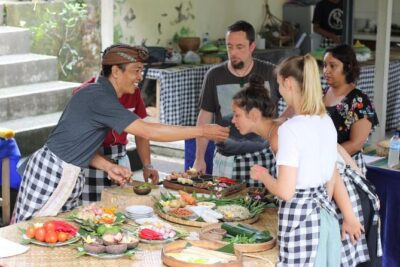
This tour is built for people who want more than a recipe demo. You’re not just watching someone else cook. The format is a working day where you learn by doing, then you sit down and eat what your table helped create.
The day is paced like this: you meet first, head into a local market area to see spices, produce, and pantry staples, then you come back to cook. Along the way you’ll get snacks and drinks, and by lunchtime you’re eating a feast made from the dishes you prepared.
You’ll also get a certificate of completion and a recipe book. That matters because the real goal is taking the techniques home, not just taking photos.
Where You Meet at Warung Nia and How the Timing Works
You meet at Warung Nia Balinese Food & Pork Ribs, Kayu Aya Square, on Jl. Kayu Aya No. 19-21 in Seminyak. The start time is listed as 8:00 am, and the market activity kicks off around 8:30.
There’s no private drop-off, and the end point is back at the meeting location. The operator notes that their staff can assist you with transport after the class, which is useful if you’re staying somewhere you don’t want to walk back from.
A practical note: plan this day like a real half-day outing. People who want a quick, casual 2 hour “taste and go” will feel disappointed. The class is designed as a full cooking day.
Seminyak Morning Market Stop: Seeing Spices Before You Cook
One of the strongest parts of this experience is the ingredient legwork. Early in the day, you go to a traditional market area where you can actually find the products that go into Balinese cooking.
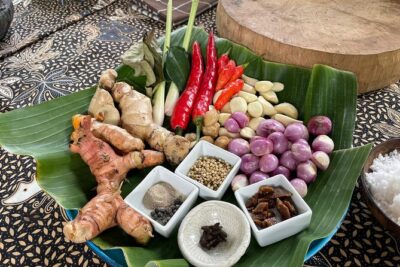
This is where you understand the logic behind the flavors. You see how spices look and smell. You learn that Balinese cooking is not just “hot.” It’s about layers: aromatics, fresh herbs, toasted spice mixes, and sauces that taste different from country to country.
This market visit also has a practical upside. You can buy ingredients you want to take home, and some guests mention the benefit of having staff help with pricing at the market. If you’re flying and bringing food items home, think ahead about packaging and labels so your items travel safely.
The downside is time and heat. Markets are active and outdoor. Wear comfortable shoes, bring water, and expect that you’ll be spending time standing.
More things you make and take home
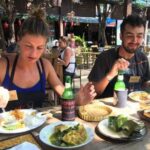

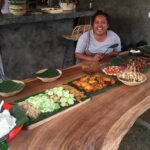
Cooking Class Flow: From Snacks to Banana Leaf Ayam Betutu Style
Once the market part is done, the class shifts into “work mode,” but it’s not chaotic. There’s a setup phase where you get snacks and drinks, then you start cooking multiple dishes.
The most iconic technique on the menu is the banana leaf wrapping and folding process used in an Ayam Betutu style dish. Even if you don’t cook that exact dish at home, the folding and sealing concept is a skill you can reuse for other Indonesian-inspired cooking.
You should also know how the class tends to run: it’s collaborative. Dishes are prepared as a group, and staff often finishes or sets up portions so the group can keep moving through recipes. That approach is a good fit if you like a social kitchen. If you prefer cooking one dish start-to-finish by yourself, you may wish the class spent more time completing fewer recipes.
On the plus side, the guides tend to be very interactive. Chefs and hosts such as Chef Komang and Tommy are described as organized and helpful, including keeping the pace steady even when the class has a bigger headcount than you might expect.
The Dishes You Learn: Nasi Goreng and 8 to 11 Balinese Favorites
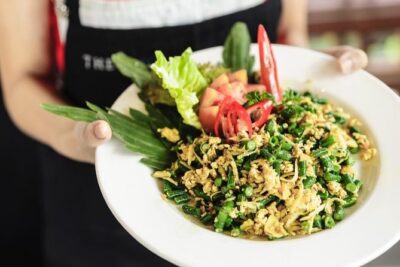
The itinerary overview says you’ll cook 9 dishes. The class is described as focusing on traditional Balinese food, including both beloved everyday dishes and the more traditional banana leaf wrapped styles.
A couple of dishes are specifically named:
- Ayam Betutu style cooking with banana leaf folding
- Nasi Goreng, the popular fried rice you’ll recognize from Indonesian menus worldwide
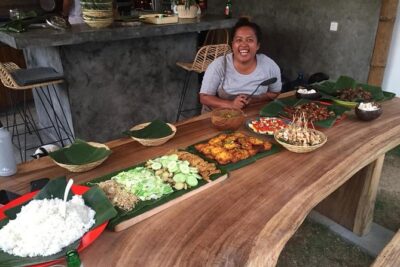
From the full experience description and the way guests talk about it, you should expect a mix of mains and supporting dishes. People mention that by the end, there’s enough food for a real lunch banquet, not small tasting plates.
What’s valuable here is not memorizing dish names. It’s learning the pattern of Balinese cooking:
1) build flavor with aromatics and spice mixes
2) balance with sauces and fresh elements
3) use the cooking method (grilling, frying, simmering) that fits the dish
4) finish with the right texture, not just taste
If you cook at home, that’s the hardest part to learn from a recipe card. This class teaches the practical order.
Lunch: The Feast Part You Should Not Skip Breakfast For
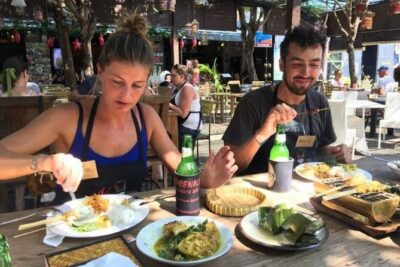
After the cooking comes the best payoff. Lunch is included, and you eat a banquet-style meal made from what you cooked.
You’ll likely taste multiple dishes in one sitting, and the best advice is to arrive hungry. Several guests recommend skipping a big breakfast. It’s not because the food is bland, it’s because there is a lot of it.
If you’re the type who wants a light meal, plan for a lot of small-and-medium servings rather than one delicate plate. Come prepared to relax and enjoy.
Also, the staff and chef teams are described as keeping things moving, with the workspace managed so each recipe step is ready when your group starts the next dish. That’s part of why lunch feels like a reward instead of an awkward wait.
Certificate, Recipe Book, and Photos You Can Actually Use
You get three take-home pieces:
- lunch (included)
- a cooking class certificate
- a recipe book
The recipe book is the practical souvenir. A “mini cookbook” format is mentioned, and guests say it’s a useful keepsake for recreating dishes later. You’ll also come away with clearer instincts for seasoning and technique, not just measurements.
There’s also a social touch. Guests mention that the team takes photos and videos during the class, and some report receiving photos after. That’s nice if you want memories without staging everything yourself.
Group Size, Comfort, and Pacing: The Tradeoffs of a Hands-On Half Day
This tour is capped at 15 travelers in the listing info, and the class is also described as having a max group size. At the same time, some people report groups in the high teens (around 16-20) depending on the day.
What that means for you: expect a lively, busy kitchen. You’ll still get hands-on time, but the class works like a coordinated assembly line. Staff may take some cooked items away to finish while you move to the next dish.
Time-wise, plan on 5+ hours. One guest notes arriving at 8 am and leaving just after 1 pm. Another mentions being on your feet the whole time.
If you want to maximize comfort:
- wear shoes you can stand in
- bring a light layer, even in Bali, because kitchens can swing between hot and air-conditioned
- eat lightly beforehand, so lunch is enjoyable, not miserable
If you dislike group cooking formats where different parts of dishes are made by different people, decide based on your own cooking style.
Price and Value in Seminyak: What $45 Really Buys
At $45 per person, you’re paying for a full day experience, not just a lesson. Here’s what’s included:
- a market visit in the morning
- snacks and drinks
- cooking instruction and hands-on prep
- lunch
- certificate
- recipe book
That combination is what makes the price feel fair. Many cooking classes charge similar amounts, but fewer include a market component and a full meal.
Also, you’re learning in an environment where the ingredients are fresh and local. If you’ve ever tried to cook Balinese food at home with supermarket substitutions, you already know why that matters. This class gives you a more accurate ingredient foundation.
The main value question for you is this: do you enjoy cooking as a social activity, with a guided pace? If yes, you’ll feel like your money turned into a real experience.
If you’re looking for a quiet, private cooking lesson, the group format might feel less tailored.
Who Should Book This Class (and Who Might Want a Different Option)
This class is a great fit for:
- food lovers who want Balinese cooking techniques, not just recipes
- people who enjoy markets and want to see spices before they cook
- groups of friends, couples, and solo travelers who like meeting others
- travelers who want a structured activity in Seminyak for about half a day
You might want to think twice if:
- you’re sensitive to allergens, especially the note about vitamin allergy
- you prefer one dish, fully completed end-to-end at your own pace
- you have limited mobility or you struggle with being on your feet for 5+ hours
If you’re traveling as a small group and want a social day, this is one of the more practical “learn and eat” options in Seminyak.
Should You Book Nia Balinese Cooking Class?
I’d book it if you want a market-to-lunch cooking day with real technique and a strong payoff. The pairing of a morning ingredient hunt with hands-on cooking is exactly what helps you remember the flavors, and the included lunch makes it feel complete.
Book with a simple expectation: it’s a busy half day, hot at points, and you’ll cook several dishes as a team. If that style suits you, you’ll leave full, with a certificate and a recipe book you can actually use.
If you want a quiet private class, or you’re worried about allergies or long standing time, look for a different format.
FAQ
What time does the cooking class start?
The meeting point start time is 8:00 am, with the market visit starting around 8:30 in the morning.
Where is the meeting point in Seminyak?
You meet at Warung Nia Balinese Food & Pork Ribs, Kayu Aya Square, Jl. Kayu Aya No. 19-21, Seminyak, Kec. Kuta Utara, Bali 80361.
Is lunch included?
Yes. Lunch is included as part of the experience.
How long is the experience?
The duration is listed as about 5 hours.
Do they provide drop-off transport?
No drop-off transport is provided. Staff can help you get transport.
What is the group size limit?
The tour lists a maximum of 15 travelers.
Is the class okay for people with vitamin allergies?
It is not recommended for travelers with vitamin allergy. If you have any concerns, confirm details when booking.
What happens if it’s canceled due to weather or if I cancel?
This experience requires good weather. If it’s canceled due to poor weather, you’ll be offered a different date or a full refund. You can cancel for a full refund up to 24 hours before the experience starts.
Make Something to Take Home
- Balinese Cooking Class in Seminyak★ 5.0 · 281 reviews
- Nia Bali Seminyak Cooking Class★ 5.0 · 127 reviews
- Canggu: Surfing lesson with ISA certified instructor★ 5.0 · 102 reviews
- Cooking class in the comfort of your own personal villa. Yes, I’ll come to you!★ 5.0 · 80 reviews
- The funniest private 2 hour surf lesson, Canggu★ 5.0 · 70 reviews
- Kuta Seminyak Scooter Lessons★ 5.0 · 40 reviews
More Tour Reviews in Seminyak
- Bali Full-Day Traditional Village Sightseeing Trip All Inclusive★ 5.0 · 3,069 reviews
- Experts Bali Driver : Best Bali Private Driver for Tour in Bali★ 5.0 · 1,339 reviews
- Bali Hai Sunset Dinner Cruise★ 5.0 · 1,173 reviews
- Mount Batur Sunrise Trekking★ 5.0 · 947 reviews
- Private Arrival Transfer: Bali Airport to Hotel★ 4.5 · 739 reviews
- Ubud Hot Springs and Waterfall Private Guided Tour★ 5.0 · 719 reviews
Learn to Cook It Properly
- Balinese Cooking Class in Seminyak★ 5.0 · 281 reviews
- Nia Bali Seminyak Cooking Class★ 5.0 · 127 reviews
- Cooking class in the comfort of your own personal villa. Yes, I’ll come to you!★ 5.0 · 80 reviews
- Balinese Cooking Class & Tanah Lot Temple Visit – Private & All-Inclusive★ 5.0 · 24 reviews
- Balinese Cooking Class at The Santai Umalas Kerobokan★ 5.0 · 20 reviews
- Traditional Tempeh Making & Cooking Balinese Cuisine★ 5.0 · 18 reviews
Just written up around Seminyak


Balinese Cooking Classes, compared.
 ★ 5.0Balinese Cooking Class in SeminyakFrom $66281 reviews
 ★ 5.0Nia Bali Seminyak Cooking ClassFrom $71127 reviews
 ★ 5.0Cooking class in the comfort of your own personal villa. Yes, I’ll come to you!From $5080 reviews
 ★ 5.0Balinese Cooking Class & Tanah Lot Temple Visit – Private & All-InclusiveFrom $9524 reviews
 ★ 5.0Balinese Cooking Class at The Santai Umalas KerobokanFrom $4520 reviews
 ★ 5.0Traditional Tempeh Making & Cooking Balinese CuisineFrom $3918 reviews
 ★ 5.0Bali Cooking Class Experience with All InclusiveFrom $6212 reviews
 ★ 5.0Private Javanese Cooking Class with Dotty in Tumbak Bayuh, CangguFrom $744 reviews
Browse the lists this tour appears in